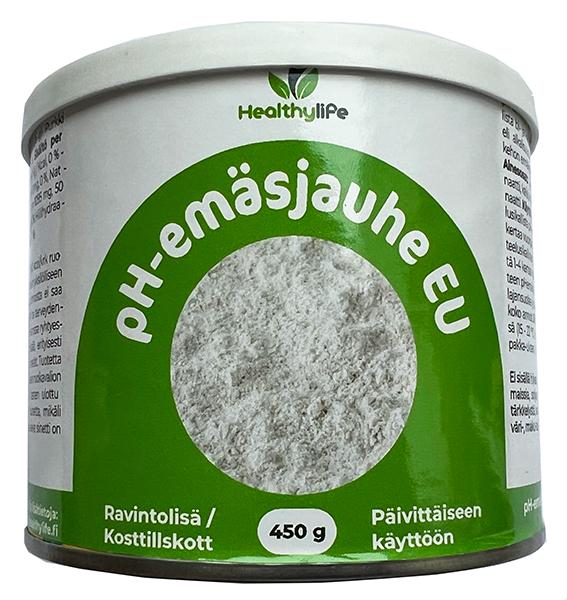


Montmorillonite pH Clay 250 g
18.40€
Montmorillonite clay is negatively highly charged – filled with electrons directly for use by your body In addition, it can trap and absorb acids many times its weight until your body is ready to safely eliminate acids. At the same time, clay can potentially prevent acids from being stored in the fat layer.
44 in stock
Description
Clay is rich in alkaline minerals, calcium, iron, magnesium, potassium, manganese, sodium, sulfur, and silicon. In clay, the relationship between these two concentrations is dictated by nature and is effectively absorbed by the body. Clay is able to bind acids many times more in relation to its weight, retaining them until your body can safely remove them. pH balance clay is a natural, neutralizing agent for both internal (digestive tract) and external (skin) acids. It effectively removes waste products.
The right kind of clay will give your body a convincing selection of basic minerals such as calcium, iron, magnesium, potassium, manganese, sodium, sulfur and silicon in the right proportion. In addition, bentonite clay also contains iodine.
Montmorillonite clay is negatively highly charged – filled with electrons directly for use by your body In addition, it can trap and absorb acids many times its weight until your body is ready to safely eliminate acids. At the same time, clay can potentially prevent acids from being stored in the fat layer.
In fact, the negatively charged bentonite or montmorillonite clay attracts and absorbs many positively charged body contaminants such as toxins and microbes and also helps the body to safely get rid of them. Clay improves digestion, blood circulation, sleep, energy levels, well-being, and resistance. In addition, clay helps to lose weight and maintain an ideal weight. Montmorillonite clay and bentonite clay are the most common and edible clays.
You can add aloe vera and grape seed oil to the clay. Don’t let the thought of eating clay startle you. Clay tastes mild and neutral (like tofu) and tastes like what you eat with it.
If the word aluminium raises concerns for you, it is important to know the following: the aluminium in montmorillonite clay occurs in its natural, bound form as aluminium oxide (Al₂O₃). This is not the same as free aluminium, which is often linked to health concerns, such as aluminium salts used in deodorants. The aluminium oxide in the clay is part of the mineral structure and does not dissolve into the body in harmful amounts.
Aluminium oxide is completely harmless and is found everywhere in nature – in rocks, soil, and even within plant tissues. It gives montmorillonite clay its strong, layered structure and makes its surfaces naturally negatively charged. This property is precisely what enables the clay to bind acids, waste products and impurities, thereby supporting the body’s natural cleansing processes.
In addition, aluminium oxide is an essential part of the clay’s mineral balance: it provides stability that keeps other minerals – such as magnesium, calcium and iron – in the correct proportions.
The clays we offer you can eat/drink completely. Now the packaging is also biodegradable, so do not water the packaging.
USE:
1. For internal use: Mix 1 teaspoon per liter of water 3-4 times a day.
2. For external use: For a face mask, make a mixture of clay and water. Apply a thin layer of clay on the face and neck. I let the mask almost dry and then remove it with a wet towel. Rinse the rest of the mask with warm water. Insect stings and bites are covered with pH clay paste. To burn and soothe burns, irritated, itchy skin, bruises and bruises, cover with pH clay paste.
Ingredients
100% French Montmorillonite Clay, pH 7-8
Dosage and use:
1.) Internally: Mix 1 teaspoon 1-3 times a day with one liter (or 2 dl) of pure water or a pH potent. Let the water soak in the clay for about 10 minutes. Mix well and drink a full dose with clay.
2.) Externally: For a face mask, make a mixture of clay and water. Apply a thin layer of clay face mask to cover face and neck. Rinse off after the clay has dried.
The recommended oral dose should not be exceeded. Talk to your doctor or health care professional about starting a nutritional supplement, especially during pregnancy or breastfeeding. The product should not be used as a substitute for a varied diet. Keep out of the reach of children. Do not use the product if the sealing tape on the package is broken. Contains no yeast, milk, eggs, gluten, corn or wheat, and no sugar, starch, salt, preservatives or artificial colorings, flavors or flavorings.
Nutritional information
Montmorillonite clay contains the following minerals:
Silica SiO2 – 55.47%, Alumina Al2O3 – 18.64%, Iron oxide Fe2O3 – 6.35%, Magnesium oxide MgO – 4.01%, Potassium oxide K2O – 3.66%, Calcium oxide CaO – 1.93%, Sodium oxide Na2O – 1.10%, Mn 2 O 3 – 0.15%,
Serving – 1 teaspoon or about 3 g to 3 g /% *
Calories / kcal 0.0 0%
Cholesterol –
Sodium 3.9 mg> 0%
Carbohydrate 0.0 g 0%
Dietary fiber 0.0 g 0%
Sugar 0.0 g 0%
Protein 0.0 g 0%
* The value is based on a 2000 kcal/day diet. The dosage is adjusted to the individual need.
Package contains: 250 g Montmorillonite clay, approximately 80 servings
This product is also available in a 500g pack.
Additional information
| Weight | 0.27 kg |
|---|